The One Universal Mutual Fund Strategy: A Master Guide for Salaried & Self-Employed Investors
Published on: October 26, 2023 | Category: Personal Finance, Investing
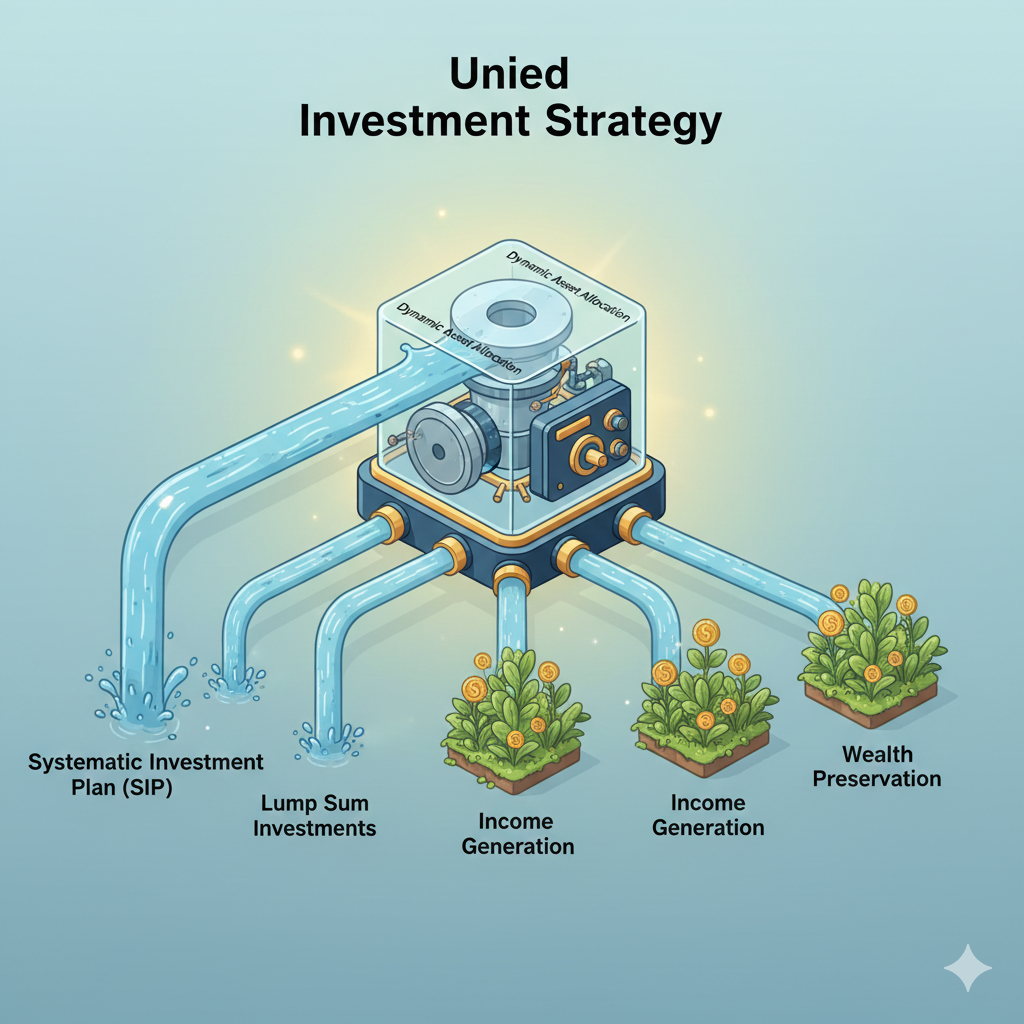
In the diverse world of personal finance, salaried employees and self-employed individuals often seem to operate on different planets. One craves stability and predictable cash flows, while the other navigates variable income and business cycles. Yet, when it comes to building long-term wealth, there is one mutual fund strategy that stands out for its remarkable effectiveness, simplicity, and adaptability for both groups: The Hybrid Systematic Investment Plan (SIP) with Dynamic Asset Allocation.
This isn’t about a “get-rich-quick” scheme. It’s a disciplined, strategic framework that aligns with human psychology, market realities, and the fundamental financial needs of every working professional. Let’s dive deep into why this strategy works, how to tailor it for your income type, and the mechanics of making it your wealth-building engine.
Core Philosophy: The “Set-and-Forget” Engine
The strategy’s power lies in automating discipline. It removes emotion from investing, enforces regular savings (crucial for both income types), and leverages the twin forces of rupee-cost averaging and long-term compounding. The “hybrid” and “dynamic” components add a layer of intelligent risk management, making it resilient across market cycles.
Why This Single Strategy Fits Both Worlds
At first glance, the financial lives of a salaried person and a freelancer or business owner look opposites. But their investment needs converge on three critical points:
- Need for Discipline: Salaried individuals can become passive, letting expenses rise with income. Self-employed individuals face irregular income, making ad-hoc investing inefficient. A core SIP enforces unshakeable discipline for both.
- Exposure to Market Volatility: Neither group has the time or expertise to time the market. Both need a strategy that manages volatility automatically.
- Long-Term Financial Goals: Retirement, children’s education, home purchase – these goals are universal and require a long-term, goal-based approach.
The Strategy Deconstructed: Three Pillars
Pillar 1: The Core Equity SIP (The Growth Engine)
This is a mandatory, non-negotiable monthly investment in a diversified equity mutual fund (like a Flexi-cap or Large & Mid-cap fund). Its purpose is to provide high growth potential over 10+ years.
- For Salaried: Deducted automatically on your salary date. Treat it like a monthly EMI for your future.
- For Self-Employed: Set up an auto-debit for a conservative fixed amount (based on your lowest estimated monthly income) immediately after a client payment cycle. This guarantees the SIP never bounces.
Pillar 2: The Dynamic SIP in a Hybrid/Aggressive Hybrid Fund (The Shock Absorber)
This is the strategic heart. You invest a separate, fixed amount monthly into a Dynamic Asset Allocation Fund or a Balanced Advantage Fund (BAF). These funds automatically shift allocation between equity and debt based on market valuations (like P/E ratios). They buy more equity when markets are cheap and reduce exposure when expensive.
| Feature | How it Helps Salaried Investors | How it Helps Self-Employed Investors |
|---|---|---|
| Automatic Rebalancing | Protects accumulated corpus during market peaks without requiring active monitoring (busy with job). | Provides built-in stability during business income downturns; acts as a “buffer” asset. |
| Risk Management | Reduces portfolio volatility, preventing panic-driven withdrawals during crashes. | Manages risk exposure automatically, crucial when personal business risk is already high. |
| Psychological Comfort | Ensures you stay invested through cycles, knowing a professional mechanism is managing allocation. | Allows focusing on business without worrying about market timing for investments. |
Pillar 3: The Goal-Based Debt SIP (The Anchor)
For short-to-medium-term goals (3-7 years), run a parallel SIP in a conservative debt or hybrid fund. This creates a separate, low-volatility pool of money, preventing you from dipping into your long-term equity investments for sudden needs.
Key Takeaway: The Combined Effect
The Core Equity SIP aggressively pursues growth. The Dynamic Hybrid SIP intelligently manages risk and enhances risk-adjusted returns. The Debt SIP secures near-term goals. Together, they create a robust, self-adjusting portfolio suitable for any market condition and any income pattern.
Implementation Blueprint: A Comparative Table
| Aspect | Strategy for Salaried Individuals | Strategy for Self-Employed Individuals |
|---|---|---|
| Income Mapping & SIP Date | Set all SIPs for 2-3 days after your salary credit date. Automate completely. | Analyze 12-month cash flow. Set SIP date after your most consistent income receipt (e.g., after major client payments). Use two dates if needed. |
| Allocation Ratio (Example) | 50% to Core Equity SIP, 30% to Dynamic Hybrid SIP, 20% to Debt SIP. | 40% to Core Equity SIP, 40% to Dynamic Hybrid SIP (for more stability), 20% to Debt SIP. |
| Handling Windfalls/Bonuses | Invest lumpsum into the Dynamic Hybrid Fund (which will allocate it based on current market conditions). | Park windfalls in a liquid fund first. Then, transfer in 3-4 chunks over 6 months into the Dynamic Hybrid Fund via STP (Systematic Transfer Plan). |
| During Income Shocks | If laid off, pause the Core Equity SIP first, try to continue the Dynamic SIP to keep the safety net active. | In a bad business month, pause the Core Equity SIP. Maintain the Dynamic SIP even if at a reduced amount to keep the habit. |
| Review Mechanism | Annual review. Check if increase in salary allows for a 10-15% step-up in all SIPs. | Semi-annual review. Align SIP amounts with revised annual income projections. |
Sample Portfolio Allocation Over Time
| Investor Age / Phase | Core Equity SIP | Dynamic Hybrid SIP | Debt SIP | Rationale |
|---|---|---|---|---|
| Early Career (25-35 yrs) | 60% | 30% | 10% | High risk capacity. Focus on aggressive growth. |
| Mid Career (35-50 yrs) | 50% | 35% | 15% | Building peak corpus. Dynamic fund protects gains. |
| Pre-Retirement (50-60 yrs) | 30% | 50% | 20% | Capital preservation becomes key. Dynamic allocation does the heavy lifting. |
Frequently Asked Questions (FAQs)
Q1. Isn’t a simple Equity SIP enough? Why complicate with a Hybrid SIP?
A: A pure Equity SIP is excellent but requires the investor to actively rebalance or switch to debt eventually. Most people fail at this. The Dynamic Hybrid SIP builds this crucial rebalancing feature into the strategy itself, making it fail-safe.
Q2. As a self-employed person with erratic income, how can I commit to a fixed SIP?
A: Base your SIP commitment on your bare minimum expected monthly income, not the average. During high-income months, invest the surplus via lumpsum into the same Dynamic Hybrid fund. This “Fixed SIP + Variable Lumpsum” model works perfectly.
Q3. Which specific funds should I choose?
A: Focus on funds with a long track record (7-10+ years), consistent management, and a clear mandate. For the Dynamic Hybrid portion, choose funds known for their disciplined model-based allocation. [Note: This blog does not recommend specific funds. Consult a financial advisor for personalized selections.]
Q4. When should I stop or redeem these SIPs?
A: These SIPs should ideally run until your goal arrives. Use a Systematic Withdrawal Plan (SWP) from the Dynamic Hybrid or Debt portion when you need regular income (e.g., in retirement). Never stop the SIPs abruptly unless in a severe financial crisis.
Start Your Universal Wealth Journey Today
The divide between salaried and self-employed is vast in many ways, but the path to financial freedom doesn’t have to be. The Hybrid SIP Strategy with Dynamic Allocation is that rare unifying framework—adaptable, disciplined, and intellectually robust.
Your Action Plan: 1) Audit your cash flows for the last 12 months. 2) Define your long-term (10+ year) and medium-term (5 year) goals. 3) Start with a small but consistent Core and Dynamic SIP this month. 4) Automate, review annually, and increase your commitment with every income hike.
Remember, in wealth creation, the perfect strategy is not the most complex one, but the one you can stick with through life’s ups and downs. This is that strategy.
Disclaimer: This blog is for educational purposes only. Mutual fund investments are subject to market risks. Please read all scheme-related documents carefully before investing. Consider consulting with a certified financial planner for advice tailored to your specific situation.
Meta Tags (for SEO): #MutualFundSIP #InvestingForSalaried #SelfEmployedInvesting #WealthBuilding #FinancialPlanning #DynamicAssetAllocation #HybridFunds #PersonalFinanceIndia