
The Single Parent’s Complete Guide to Personal Finance in India
Because managing money alone doesn’t mean managing it poorly — it means managing it smarter.
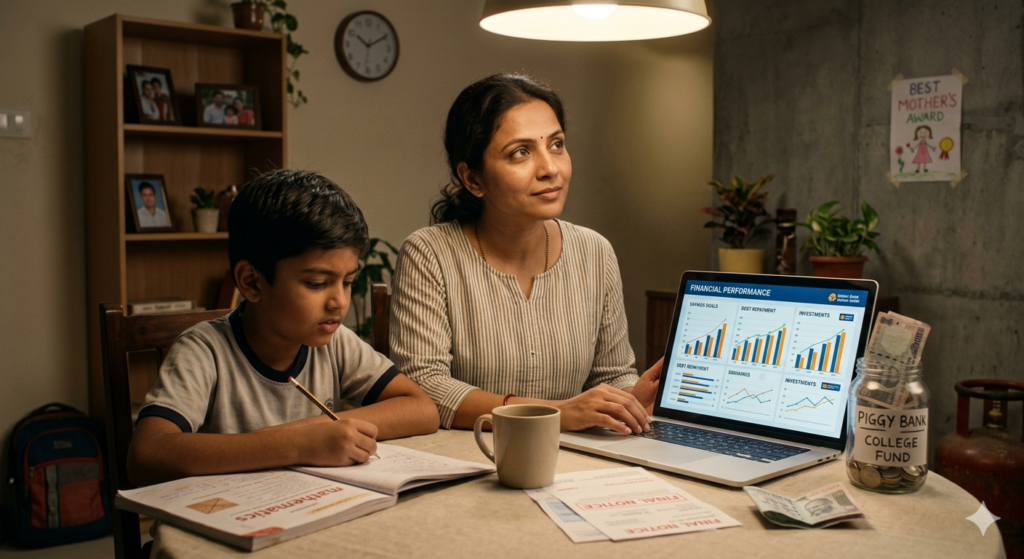
You’re the CFO, the HR department, the legal counsel, and the emotional support system — all rolled into one. Oh, and you also pack lunch boxes, attend parent-teacher meetings, and somehow still find time to worry about your child’s college fees in 2035. Welcome to the world of single parenting in India. No one sends you a manual. But this article is the next best thing.
Whether you became a single parent through divorce, the loss of a spouse, or by choosing to raise a child on your own, the financial landscape you’re navigating is genuinely different from that of a two-income household. The safety nets are thinner. The decisions are heavier. And the societal pressure — especially in India — can make an already complex situation feel suffocating.
But here’s what nobody tells you: single parents, when armed with the right financial strategies, can build remarkably resilient, prosperous futures for their families. This guide is not about pity. It’s about power. Let’s get to it.
The Unique Financial Reality of Single Parents in India
Before we dive into solutions, let’s acknowledge what makes personal finance for single parents in India uniquely challenging. Understanding the problem is half the battle.
One Income. Double the Responsibility.
In a dual-income household, there’s always a cushion. If one partner loses a job, the other’s salary can temporarily cover essentials. Single parents don’t have that luxury. Every financial decision — from buying a new washing machine to planning a vacation — rests on one pair of shoulders.
Social Stigma and Its Hidden Costs
India is changing, but slowly. A divorced or unmarried single mother in many parts of India still faces judgment that affects her financially — landlords who refuse to rent, employers who harbour unconscious bias, or family members who assume she cannot manage money independently. These aren’t just emotional wounds; they’re financial barriers.
No Financial Backup Plan
In most Indian families, the joint family system acts as an informal safety net. But single parents — particularly those estranged from family — may not have this buffer. A medical emergency or job loss can spiral quickly without a support system.
Priya, 34, Bengaluru — A software engineer and single mother of a 6-year-old after her divorce three years ago. She earns ₹75,000/month, pays ₹22,000 in rent, ₹8,000 in school fees, sends ₹10,000 to her parents, and still tries to save. She came to realise she had no life insurance, no emergency fund, and her entire financial plan was to “figure it out.” Sound familiar?
Priya’s story is not unusual. It’s the norm. And the good news? It’s fixable. Let’s break down exactly how.
Budgeting for Single Parents: The Honest Version
Every financial article on the planet will tell you to “make a budget.” Great advice. But most budget templates are designed for households with two salaries, a car EMI, Netflix, and a gym membership. Let’s build something real.
The 50-30-20 Rule — Adjusted for Indian Single Parents
The classic 50-30-20 rule (50% needs, 30% wants, 20% savings) is a reasonable starting point, but it needs tweaking for your reality:
| Category | Standard Rule | Single Parent Adjustment | Why |
|---|---|---|---|
| Needs | 50% | 55–60% | Childcare, school fees, health costs are non-negotiable |
| Wants | 30% | 10–15% | Cut back — not forever, just strategically |
| Savings & Investments | 20% | 20–25% | You have no second income fallback — save harder |
| Insurance Premiums | Often forgotten | 5% minimum | This is your family’s lifeline |
Track Every Rupee — Seriously
This isn’t about being obsessive. It’s about being aware. Use free apps like Walnut, Money Manager, or even a simple Google Sheets template to track your spending for 30 days. You’ll almost certainly discover ₹3,000–₹8,000 in monthly “leakage” — subscriptions you forgot, impulse purchases, or overpriced groceries.
Create separate digital wallets or sub-accounts (most modern banks offer this) for: household expenses, child’s education, emergency fund, and personal savings. When the household wallet runs dry, it stops you from dipping into savings. This “envelope method” in digital form works surprisingly well.
Reduce Fixed Costs Aggressively
Your rent is likely your single largest expense. If you’re renting alone in a metro city, consider whether a 2BHK closer to your parents (rent-sharing arrangement) could save ₹8,000–₹15,000 a month. That’s ₹1–1.8 lakh a year — almost a mutual fund SIP on its own.
Building an Emergency Fund: Your Financial Oxygen Mask
Flight safety instructions say it clearly: put on your oxygen mask before helping others. The same principle applies to money. If you have no emergency fund, one bad month can unravel years of careful planning.
How Much Should a Single Parent in India Save?
The standard advice is 3–6 months of expenses. For single parents, aim for 6–9 months. Here’s a realistic calculation:
- Monthly rent: ₹18,000
- Groceries & utilities: ₹8,000
- School fees (monthly): ₹6,500
- Transport: ₹3,500
- Insurance premiums: ₹4,000
- Miscellaneous: ₹5,000
- Total monthly need: ₹45,000
- Target emergency fund (6 months): ₹2,70,000
This seems large. But broken into a ₹5,000/month SIP in a liquid mutual fund, you can build this in 54 months (~4.5 years) — or faster if you invest windfalls (bonuses, tax refunds).
Where to Park Your Emergency Fund
Your emergency fund must be liquid (accessible within 1–3 days) and safe (not subject to market risk). Best options in India:
- High-interest savings account (e.g., IDFC First, AU Small Finance Bank offering 6–7% on savings)
- Liquid mutual funds (returns ~6.5–7%, redeemable in 1 business day)
- Short-term FDs with premature withdrawal facility (safe, low but stable returns)
Avoid keeping your emergency fund in a regular savings account offering 3% — that’s just inflation slowly eating your safety net.
Insurance Planning: The Non-Negotiable Foundation
If there is one financial mistake that single parents in India consistently make, it is underinsurance. In a two-parent household, the death of one parent is a tragedy but not necessarily a financial catastrophe. For a single parent family, it could be both.
Life Insurance: Term Plan First, Always
Do not let any agent sell you a ULIP, endowment plan, or money-back policy as your primary life insurance. These are expensive, low-coverage products. What you need is a pure term insurance plan.
Your life cover should be at least 15–20 times your annual income. If you earn ₹8 lakh/year, your term cover should be ₹1.2–1.6 crore. This ensures your child’s education, daily expenses, and future are protected even if you’re not around. The premium for a healthy 32-year-old non-smoker? As low as ₹8,000–₹12,000/year for ₹1 crore cover.
Health Insurance: Don’t Rely on Employer Cover Alone
Employer-provided health insurance vanishes the moment you change jobs. Buy a separate family floater health policy (covering you and your child) with a sum insured of at least ₹10 lakh. Consider a top-up plan if the base premium feels high. Brands like Niva Bupa, Star Health, and HDFC Ergo offer solid options.
Critical Illness Rider
Add a critical illness rider (cancer, heart attack, stroke, kidney failure) to your base health plan. A serious illness doesn’t just mean hospital bills — it also means lost income during recovery. A lump-sum payout from a critical illness plan can bridge that gap.
Child Education Planning: Start Yesterday
Education costs in India are rising at approximately 10–12% per year — nearly double the general inflation rate. A private engineering or medical seat that costs ₹15 lakh today will cost ₹65–80 lakh in 15 years. That’s not a typo.
Calculate Your Target Corpus
Use this simple approach: identify the kind of education you want for your child, estimate its current cost, and inflate it by 10% per year over the years remaining.
Current cost of a private engineering degree: ₹15 lakh.
Child’s age: 5 years. Years to graduation: 13 years.
Future cost (at 10% inflation): ₹15L × (1.10)^13 = approx. ₹51 lakh
Monthly SIP needed (assuming 12% equity mutual fund returns): ~₹10,500/month
Best Investment Vehicles for Child Education
- Equity Mutual Funds (SIP) — Best for long-term (7+ years). Diversified equity or flexi-cap funds work well.
- Sukanya Samriddhi Yojana (SSY) — For single mothers with daughters: 8.2% guaranteed rate, tax-free maturity. One of the best government schemes available.
- Public Provident Fund (PPF) — 7.1% guaranteed, EEE tax status (exempt at investment, interest, and maturity). Suitable for conservative investors.
- Child ULIPs — Only if you need insurance + savings combined; compare costs carefully before buying.
Debt Management: Getting Off the Treadmill
Many single parents, particularly post-divorce, find themselves carrying debt — personal loans taken during the marriage, credit card dues, or loans taken to stabilise finances after the split. Managing debt on a single income requires a clear, unemotional strategy.
The Debt Avalanche Method (Save More, Faster)
List all your debts by interest rate (highest first). Pay the minimum on all, then throw every extra rupee at the highest-rate debt. Once that’s cleared, cascade to the next. Credit cards at 36–42% annual interest should always be at the top of this list.
Debt Consolidation: A Genuine Option
If you’re paying high interest on multiple loans, a personal loan at a lower rate (to consolidate all into one) can reduce your monthly outgo. Banks offer this; compare using platforms like BankBazaar or PaisaBazaar.
- Buy Now Pay Later (BNPL) schemes — seductive but dangerous on a tight budget
- Borrowing from relatives informally without a clear repayment plan
- Rolling over credit card balances month after month
- Taking personal loans to fund vacations or non-essential purchases
Investment Options for Single Parents in India
You don’t need to be rich to invest. You need to be consistent. Here’s an investment framework tailored for single parents who have limited surplus but need to build wealth over time.
Stage 1: Foundation (Year 1–2)
Get insurance in place. Build emergency fund. Pay off high-interest debt. Do not invest in equity until these three are done. This is non-negotiable.
Stage 2: Systematic Investment (Year 2 onwards)
| Investment Option | Risk | Expected Return | Best For |
|---|---|---|---|
| Equity Mutual Fund SIP | Medium-High | 10–14% | Long-term wealth (7+ years) |
| PPF | Zero | 7.1% | Retirement / guaranteed corpus |
| NPS (National Pension System) | Low-Medium | 8–10% | Retirement with tax benefit |
| Sukanya Samriddhi Yojana | Zero | 8.2% | Girl child education / marriage |
| Bank FDs / RDs | Zero | 6.5–7.5% | Short-term goals (<3 years) |
| REITs | Medium | 7–9% | Real estate exposure without buying property |
The Power of SIP: A Single Parent’s Best Friend
A Systematic Investment Plan (SIP) of even ₹3,000/month in a diversified equity mutual fund, started at age 30, grows to approximately ₹1.06 crore by age 60 (at 12% annual returns). You don’t need to time the market. You need to stay in the market.
Government Schemes Single Parents in India Must Know
India has several schemes that single parents — especially single mothers — are entitled to but rarely utilise because nobody tells them about it. Consider this your official briefing.
Central Government Schemes
- Pradhan Mantri Jan Dhan Yojana (PMJDY) — Zero-balance bank account with accidental insurance cover of ₹2 lakh. If you don’t have this, open one today.
- Pradhan Mantri Jeevan Jyoti Bima Yojana (PMJJBY) — Life insurance of ₹2 lakh at just ₹436/year. Minimal but better than nothing for those with very tight budgets.
- Pradhan Mantri Suraksha Bima Yojana (PMSBY) — Accidental death/disability cover of ₹2 lakh at just ₹20/year. Yes, ₹20.
- Sukanya Samriddhi Yojana — High-yield, tax-free savings for girl children. Open in any post office or public sector bank.
- National Scholarship Portal — Merit and means-based scholarships for children of single parents across central and state governments.
State-Level Benefits (Select Examples)
- Maharashtra: “Ladki Bahin Yojana” — monthly financial assistance to eligible women
- Tamil Nadu: “Kalaignar Magalir Urimai Thogai” — ₹1,000/month for eligible women
- Delhi: Free education in government schools including meals and books
- Most states: Widow pension schemes ranging from ₹500–₹3,000/month
Visit your local Collectorate office, district welfare office, or use the myScheme portal (myscheme.gov.in) to search schemes you’re eligible for based on your profile. It’s free and surprisingly comprehensive.
Tax-Saving Strategies for Single Parents
The Indian tax system offers several provisions that single parents can and should maximise. Failing to do so is simply leaving money on the table.
Section 80C: ₹1.5 Lakh Deduction
Invest up to ₹1.5 lakh in PPF, ELSS mutual funds, SSY, NSC, or life insurance premiums to reduce taxable income. A single parent in the 20% tax bracket saves ₹30,000 by fully utilising this.
Section 80D: Health Insurance Premiums
Deduction for health insurance premiums — up to ₹25,000 for self and children, and an additional ₹25,000–₹50,000 for parents. This is often underutilised.
Children’s Education Allowance
If you receive an education allowance from your employer, ₹100/month per child (up to 2 children) is exempt from tax. Hostel allowance: ₹300/month per child. Small amounts, but worth claiming.
Section 80E: Education Loan Interest
If you’ve taken an education loan for your child’s higher education, the entire interest paid is deductible under Section 80E for up to 8 years. No upper limit on deduction amount.
HRA and Home Loan Benefits
If you’re renting, claim House Rent Allowance (HRA) exemption. If you’re a homeowner, interest up to ₹2 lakh on a home loan is deductible under Section 24(b). As a single parent, you are the sole owner and sole claimant — all benefits come to you.
The Mental and Emotional Side of Money Management
Here’s something financial planners often skip: your relationship with money is deeply emotional. And for single parents, financial stress is often compounded by guilt, grief, loneliness, and the constant fear of “am I enough?”
Financial anxiety is real. Research shows that financial stress raises cortisol levels — the same stress hormone that makes you eat more, sleep poorly, and make impulsive decisions. Yes, stress literally makes you worse at managing money.
Practical Mental Health Strategies for Financial Wellbeing
- Weekly “Money Date” — Spend 20 minutes every Sunday reviewing your finances. Awareness reduces anxiety more than avoidance does.
- Automate everything — SIPs, insurance premiums, utility bills. Automation removes willpower from the equation.
- Find a money accountability partner — A trusted friend or sibling who checks in on your financial goals monthly.
- Celebrate milestones — Emergency fund complete? Take your child out for a special meal. You earned it.
- Don’t compare — Your neighbour’s foreign holiday was probably funded by debt. Your child’s financial security is worth more than any Instagram moment.
Rajan, 40, Hyderabad — A widower with two children (ages 9 and 12) who worked as a schoolteacher earning ₹38,000/month. After his wife passed, he spiralled into financial paralysis — paralysed by the magnitude of what lay ahead. A community financial counsellor helped him see it differently: “You don’t have to solve the next 20 years today. You have to make one right decision this month.” That one shift changed everything. Three years later, he has a ₹4 lakh emergency fund, a ₹50 lakh term plan, and two small SIPs running. Progress, not perfection.
Common Financial Mistakes Single Parents Must Avoid
- Sacrificing your retirement for your child’s education — You can get an education loan. You cannot get a retirement loan. Save for yourself too.
- Putting all savings in gold or FDs — Gold underperforms inflation over 20-year periods. Diversify into equity for long-term goals.
- Not having a will — If you die without a will, your assets could be locked in legal battles for years. A will ensures your child inherits without complication. Get one drafted (costs ₹3,000–₹10,000 via a lawyer).
- Relying on family as a financial plan — Family is support. It’s not a portfolio. You need your own financial independence.
- Not reviewing financial plans annually — Your income, tax slab, insurance needs, and investment goals change. Review annually, at minimum.
- Ignoring your own career growth — The best investment a single parent can make is in their own earning capacity. Upskilling, certifications, and career moves can increase income faster than any mutual fund.
Your 12-Month Financial Action Plan
Don’t let the perfect be the enemy of the good. Here’s a month-by-month roadmap to get your finances in order:
-
1
Month 1–2: Know Where You Stand Track all income and expenses. Calculate net worth. List all debts with interest rates. This is your financial X-ray.
-
2
Month 2–3: Fix the Foundation Buy a term insurance plan. Upgrade or buy a health insurance plan. Set up one high-yield savings account for your emergency fund.
-
3
Month 3–4: Tackle Debt List debts by interest rate. Set up extra payments toward the highest-rate debt. Cancel unused subscriptions and redirect that money to debt.
-
4
Month 4–6: Build Your Emergency Fund Set up a standing instruction to automatically transfer ₹3,000–₹8,000 to a liquid fund every month. Don’t touch it.
-
5
Month 6–8: Start Investing Open a mutual fund account (KYC-compliant). Start a SIP in a diversified equity fund. Even ₹1,000/month is a start.
-
6
Month 8–10: Child Education Fund Open SSY (for daughters) or a dedicated equity mutual fund for your child’s education. Set up a separate SIP.
-
7
Month 10–12: Tax Planning + Will Ensure you’re maximising 80C, 80D deductions. Consult a CA if needed. Draft a simple will.
You Are Not Just Getting By. You Are Building Something.
Single parenting in India is one of the most demanding roles a person can take on. You’re doing the work of two people — emotionally, logistically, and financially. And most days, you do it without applause, without a co-pilot, and without a blueprint.
But here’s what we want you to hear: the fact that you’re reading an article on personal finance — that you’re thinking ahead, planning, strategising — means you’re already ahead of most people. You’re not just surviving. You’re setting the foundation for a future your child will look back on with pride.
Personal finance for single parents in India isn’t about being perfect. It’s about being intentional. One SIP at a time. One premium paid on time. One month’s emergency fund saved. These aren’t small things — they’re the building blocks of financial freedom.
And when you look back ten years from now — child in college, emergency fund intact, investments quietly compounding in the background — you’ll know: you didn’t just manage. You mastered it.
Frequently Asked Questions (FAQs)
Leave a Reply